

Three federal reports line up to tell one story for your food fraud prevention strategy annual update. GAO’s report on FDA’s traceability rule, FDA’s lowered detection levels guidance for lead chromate such as in cinnamon, and a new 2026 GAO report on FSMA all point the same direction. There will be more awareness of food fraud prevention.
Together, these three reports show a pattern worth building into your strategy update. GAO-24-106563, from January 2024, found that FDA’s traceability rule implementation plan was still in progress. FDA’s own testing data on the cinnamon lead chromate case, first reported in 2023, shows detection levels dropping from thousands of parts per million down to single digits over just a year. And the newest report, GAO-26-107394, from January 2026, shows that FSMA itself, the law behind all of this, is still not fully implemented after fifteen years. Read on their own, each report is a data point. Read together, they show that more monitoring and measurement is real, it is improving, and it reminds us of the application to food fraud.
[REMINDER: The Global Food Safety Initiative (GFSI) new July 2026 update – and the food safety standards including SQF, BRC/ BRCGS, FSSC22000, IFS – include mandatory food fraud components. The more comprehensive requirement includes “Appropriate knowledge and expertise for the development and maintenance of an effective food fraud assessment plan shall be used.” From BRCGS: “The interpretation highlights that competence may be demonstrated through formal training, internal knowledge or experience, and encourages a multi-disciplinary approach, recognizing that valuable input may come from technical, purchasing and supply chain functions.”]
What the GAO Traceability Report Tells Us About Fraud Prevention
GAO-24-106563 came out in January 2024. It reviewed FDA’s Food Traceability Rule. This rule requires detailed recordkeeping as high-risk foods move from farm to retailer. The compliance deadline was January 20, 2026. GAO recommended FDA finalize and document its implementation plan. FDA agreed and reported in March 2025 that it had taken steps toward drafting one. For your annual Food Fraud Prevention Strategy update, the real insight is not about FDA’s timeline. It is that the traceability infrastructure itself becomes one of your strongest fraud detection assets once your company builds it out. Lot codes, tracking events, and supply chain records do not just support outbreak response. They also reduce vulnerability or system weaknesses since there is more visibility and transparency for the products that move through your supply chain.
Applying the Cinnamon Lead Chromate Case
The 2023 cinnamon applesauce incident is a good real-world test of that idea. FDA confirmed the lead and chromium found in WanaBana, Schnucks, and Weis products came from lead chromate. This adulterant-substance has a long history of being added to spices to boost weight and color. The trend in FDA’s testing since then is encouraging. Initial samples measured 2,270 to 5,110 parts per million (ppm) lead. By mid-2024, public health alerts were identifying products with lead chromate in the 2 to 20 ppm range – the detection is now over two orders of magnitude lower than the actual incident. Detection science has kept improving since then, finding smaller and smaller amounts. FDA has paired this better detection with import alerts on the supply chain and a proposed rule for finished-product testing in infant and toddler foods. For your annual Food Fraud Prevention Strategy update, this shows how detection capability and supply chain visibility work together over time to close a vulnerability (as well as the levels that may now be detected by regulators).
Why the 2026 FSMA Report Raises the Stakes
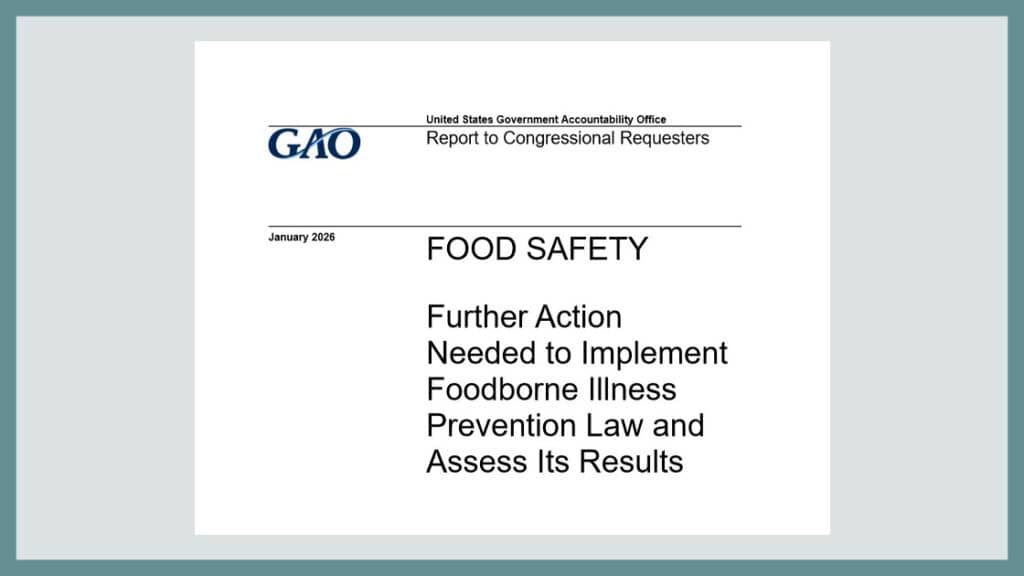
The new GAO report adds urgency to this picture. In GAO-26-107394 (Food Safety: Further Action Needed to Implement Foodborne Illness Prevention Law and Assess Its Results), GAO found that FDA still has not fully implemented the 2011 Food Safety Modernization Act. FSMA is the law behind preventive controls, traceability, and intentional adulteration rules, the same tools your fraud program relies on. More than a decade after the law passed, that foundation is still being built. For a 2026 annual update, the message is simple. Food fraud is already a real risk for your company. The GAO reports emphasize the gaps in FSMA implementation, which could mean that there will be increased regulatory scrutiny.
Using These Insights in Your Annual Update
These three reports point to the same conclusion for your fraud prevention program. Traceability recordkeeping and better detection science are not just compliance checkboxes. They are the backbone of your fraud vulnerability assessment. If your annual strategy update does not already connect your traceability data to your food fraud risk assessment, this is a good year to make that link explicit. And these reports emphasize the increasing FDA monitoring and compliance formality.
The GAO reports and the FDA cinnamon lead chromate reports teach the same lesson. Strong recordkeeping and better detection work together to close fraud vulnerabilities, and the work is not finished yet.
Takeaway Points
- Traceability and fraud prevention are not separate programs. The same data that traces an outbreak also traces a fraud scheme.
- Better detection science, shown in the cinnamon case, means vulnerabilities that once went unnoticed are now easier for regulators to catch.
- FSMA is still being fully implemented after fifteen years. New rules, guidance, or inspection activities could mean that there will be increased regulatory scrutiny.
Key Links
GAO Report (GAO-24-106563) – Food Safety: FDA Should Finalize Plans to Implement Its Rule to Help Trace Source of Outbreaks, January 2024: https://www.gao.gov/products/gao-24-106563
GAO Report (GAO-26-107394) – Food Safety: Further Action Needed to Implement Foodborne Illness Prevention Law and Assess Its Results, January 2026: https://www.gao.gov/products/gao-26-107394
FDA Cinnamon/Lead Chromate Investigation, November 2023: https://www.fda.gov/food/outbreaks-foodborne-illness/investigation-elevated-lead-chromium-levels-cinnamon-applesauce-pouches-november-2023
FSMA Preventive Controls for Human Food: https://www.fda.gov/food/food-safety-modernization-act-fsma/fsma-final-rule-preventive-controls-human-food
FD&C Act, Adulterated Food (§402) & Misbranded Food (§403): https://www.fda.gov/regulatory-information/federal-food-drug-and-cosmetic-act-fdc-act/fdc-act-chapter-iv-food